Your floors take more abuse than any other surface in your building. Here is how a consistent strip, wax, and polish program keeps them looking professional and saves you money over the long run.
Walk into any commercial building in Abilene and the first thing you notice—often before you even register the reception desk—is the floor. Scuffed, dull, or yellowing tile sends a message about how a business cares for itself. A clean, well-maintained floor does the opposite. It tells visitors, tenants, and employees that the people running this place pay attention to the details. That is exactly why regular commercial floor care is one of the most cost-effective investments a facility manager can make.
What Commercial Floor Care Actually Includes
A lot of building owners assume floor care just means mopping. It does not. A complete floor maintenance program has several distinct steps, and skipping any one of them shortens the life of the flooring and drives up replacement costs.
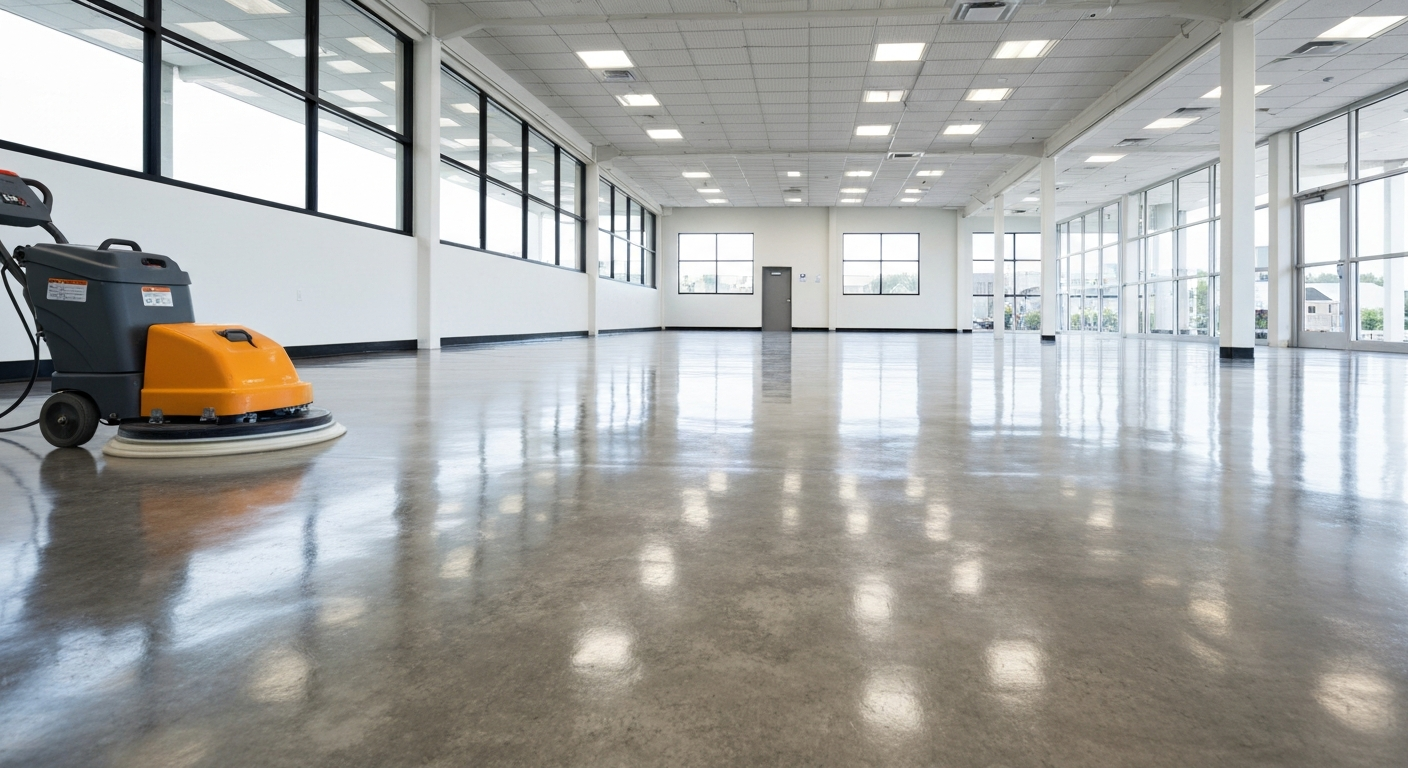
- Stripping — removing old wax, embedded soil, and yellowing buildup down to the bare tile surface.
- Waxing (finishing) — applying multiple coats of floor finish to rebuild a protective, glossy layer.
- Polishing / burnishing — restoring shine between full strips using high-speed equipment.
- Scrub and recoat — a mid-cycle service that lightly scrubs the top layer and adds fresh finish without a full strip.
- Daily maintenance — dust mopping, spot mopping, and spill response to keep grit off the finish.
Why VCT and Hard Surface Floors Yellow Over Time
Vinyl composition tile (VCT)—the standard in most Abilene office buildings, clinics, and retail spaces—is porous by design. The factory finish wears down under foot traffic, and without a protective wax layer, soil gets ground into the tile itself. That is what causes the dull, yellow, or brownish look that no amount of mopping will fix. The only remedy is a proper strip and re-wax.
Texas weather makes this worse. Grit tracked in from parking lots, combined with the dry, dusty air of the Big Country region, acts like sandpaper on a floor finish. A floor that would last two years in a milder climate can need attention far sooner here.
The Real Cost of Skipping Floor Maintenance
Replacing commercial VCT flooring typically runs several dollars per square foot once you factor in removal, prep, materials, and installation. For a 5,000-square-foot office, that is a five-figure project. A scheduled strip-and-wax program costs a fraction of that and stretches the useful life of the floor by years.
There are also the less obvious costs. Worn floors are harder to clean, which means your janitorial service spends more time for a worse result. Slippery or unevenly worn finishes are a slip-and-fall liability. And in a customer-facing business, a tired floor quietly undercuts every dollar you spend on signage, lighting, and decor.
How Often Should Floors Be Stripped and Waxed?
There is no single answer because traffic drives the schedule, but here is a practical baseline we use for Abilene-area facilities:
- High-traffic lobbies and entryways: full strip and wax every 6–9 months, with burnishing monthly.
- General office corridors: strip and wax every 12–18 months.
- Low-traffic offices and conference rooms: scrub and recoat as needed, full strip every 18–24 months.
- Restrooms and breakrooms: more frequent attention due to moisture and spills.
A Floor Care Plan Built Around Your Facility
At Panhandle Janitorial Elite Services, we do not believe in one-size-fits-all schedules. We walk your facility, look at traffic patterns, flooring type, and your budget, and build a floor care plan that keeps your building looking sharp without paying for service you do not need yet. If you manage an office, clinic, or retail space in Abilene, Wylie, Clyde, or the surrounding Big Country, give us a call at 325-204-4668 for a free floor assessment.